

Voyage Optimisation in Extreme Weather: The OSTRO I Case Study.
The OSTRO I Case Study
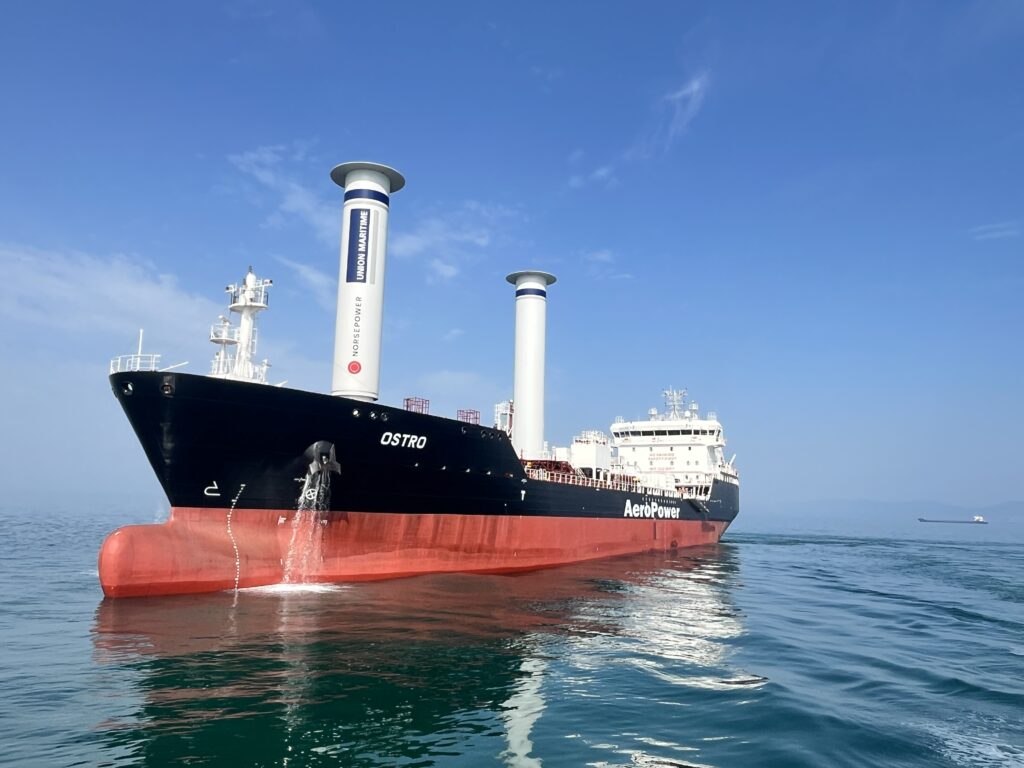
The OSTRO I Case Study.
Ascenz Marorka supported OSTRO I (Union Maritime Limited) on a voyage from Lavera to Antwerp during a period of rapidly deteriorating weather conditions. The engagement focused on balancing required speed versus actual speed over ground (SOG), monitoring developing storm systems, assessing wave and wind impact factors, and continuously optimising ETA at each waypoint to ensure a safe and efficient passage.
Operational Focus:
- Required speed versus actual SOG
- Developing storm systems
- Wave and wind impact factors
- ETA at each waypoint
Leveraging Wind-Assist Technology (WASP):
OSTRO I’s sails contributed approximately +1.2 knots of positive wind effect, helping offset wave-induced slowdowns of –1 to –1.5 knots. This performance advantage was fully integrated into Ascenz Marorka’s routing recommendations and decision-support process.
Outcome:
- The vessel successfully cleared the high-risk zone before wave heights exceeded 6–8 metres
- ETA to Antwerp was maintained despite rapidly worsening conditions
- Crew and vessel safety were protected, avoiding a potential 10-day delay
- High client satisfaction was achieved through transparency, precision, and 24/7 support
Client Feedback (Union Maritime Limited) :
“With the approaching weather, and the potential for more than 10 days’ delay if we missed the narrow opportunity to get ahead of it, the support of your platform and Fleet Centre team was appreciated.”
“The forecast quality from Ascenz Marorka enabled this window to be identified early. The enhanced support from the Fleet Centre gave additional assurance to the Master. OSTRO I’s sails helped support her speed and clear the weather, and this benefit was factored into the route recommendations.”
— Jesse Bryce, Manager – Fleet Performance, Union Maritime Limited
What This Case Demonstrates :
The OSTRO I voyage demonstrates how modern voyage optimisation combines:
- Accurate early weather intelligence
- Dynamic routing and continuous monitoring
- Real-time decision support by experienced navigators
- Integration of wind-assist performance data
Together, these capabilities enable safer, greener, and more commercially efficient voyages, even in some of the most challenging weather systems.