

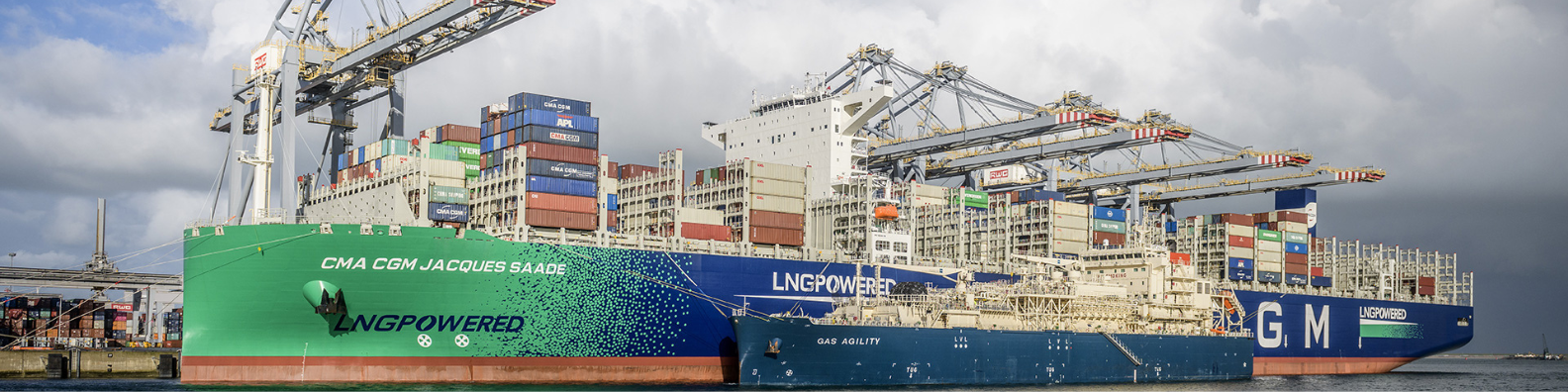
LNG Fuel Solutions
LNG Fuel Management for Ships: Advanced Digital Solutions
Ascenz Marorka, a proud member of the GTT Group, brings decades of expertise in cryogenic membrane technology, LNG containment systems, and vessel performance optimization. GTT has been at the forefront of the global LNG industry for more than 60 years, providing state-of-the-art solutions for LNG carriers, floating storage units, and regasification terminals. This extensive heritage ensures that Ascenz Marorka has the technical credibility, experience, and domain knowledge necessary to deliver reliable, innovative digital solutions for LNG fuel management.
Our solutions combine GTT’s industry-leading knowledge of liquefied natural gas behavior with Ascenz Marorka’s advanced digital capabilities, including real-time monitoring, predictive analytics, artificial intelligence, and Internet of Things (IoT) integration. This unique combination enables LNG-powered ships to optimize fuel consumption, reduce emissions, ensure operational safety, and maintain high reliability while meeting regulatory requirements.
Overview of LNG Fuel Management
Efficient LNG fuel management is essential for modern ships. LNG, as a cryogenic liquid, presents unique operational challenges. Its properties, including the production of boil-off gas (BOG) during storage, the pressure build-up in tanks, and the natural aging of methane-based fuel, require sophisticated monitoring and decision-making tools. Proper management ensures that LNG fuel is used efficiently, minimizing energy losses while maximizing engine performance and operational safety.
With the global transition towards cleaner fuels and stricter environmental regulations, LNG is becoming a key component in reducing the carbon footprint of maritime operations. Our digital solutions help ship operators monitor liquid LNG fuel in tanks, manage bunkering operations, optimize energy consumption, and ensure that fuel properties are maintained throughout the voyage. By leveraging real-time data and predictive algorithms, crews and ship operators can make informed decisions that improve overall ship performance while reducing fuel-related costs and environmental impact.
Heel Management
Heel management is a critical component of LNG fuel management, directly affecting both fuel efficiency and operational safety. Combined with voyage management modules, our system predicts the quantity of LNG fuel required to reach the destination, taking into account variations in navigation conditions, environmental factors, and the vessel’s associated power curves.
Maintaining optimal heel not only ensures safe navigation but also allows for pre-cooling of LNG tanks before arrival at the LNG bunkering terminal or the liquefied natural gas bunker vessel (LBV). By predicting the total duration of cooling and bunkering based on voyage profiles and tank conditions, the heel management module optimizes the fuel preparation process. This ensures that LNG fuel is efficiently conditioned, reducing boil-off gas generation and improving overall fuel economy.
Pump Tripping Mitigation
Fuel pump tripping is a potential risk during LNG bunkering and fuel transfer operations. Sudden interruptions can compromise ship operations and safety. Our pump tripping mitigation module uses advanced algorithms trained on hydrodynamic simulations across diverse sea conditions and ship loading scenarios.
By analyzing LNG levels in tanks and weather forecasts along the vessel’s route, the system predicts sections of the voyage where fuel pump tripping is likely. It provides actionable recommendations to the crew, including speed adjustments, heading optimization, or alternative weather routing. This ensures that the LNG fuel system operates without interruption, minimizing operational risks and protecting both the crew and the vessel.
Holding Time Analysis
LNG tanks accumulate pressure due to natural boil-off and external thermal effects. Holding time analysis provides crews with clear indications of how long a tank can safely hold rising pressure before an emergency procedure must be activated.
This module ensures proactive management of fuel pressure and enhances operational safety, particularly during long voyages or when navigating through challenging environmental conditions. By monitoring holding times for each tank, crews can plan fuel consumption, manage boil-off gas effectively, and maintain vessel performance without compromising safety.
Roll-Over Prevention
Roll-over is a hazardous phenomenon that can occur when LNG tanks contain two layers of fuel with different densities. Stratification may lead to sudden inversion of liquid phases, generating extreme quantities of boil-off gas in a short period. Such events pose risks to both the tank structure and operational safety.
Our roll-over prevention module continuously monitors LNG tank conditions, including liquid density, stratification patterns, and pressure changes. The system provides predictive insights to assist the crew in cargo and fuel management, preventing roll-over events and ensuring operational continuity. Effective roll-over prevention reduces fuel losses, avoids unnecessary emissions, and protects critical ship infrastructure.
LNG Ageing Management
LNG is a living fuel, and its thermodynamic and chemical properties evolve over time. Factors such as storage duration, temperature variations, and natural boil-off affect methane content, calorific value, and liquid density.
Ascenz Marorka’s LNG ageing module predicts these changes by monitoring pressure profiles, methane numbers, calorific value, and temperature evolution. The system provides crews and operators with actionable insights into the condition of LNG fuel on board, enabling them to manage fuel quality proactively. By integrating LNG ageing data with bunkering and consumption planning, ships can maximize fuel utilization, reduce losses, and maintain engine performance across extended voyages.
Bunker Mixing Tool
During LNG bunkering operations, mixing new fuel with remaining on-board LNG is a common scenario. Our bunker mixing tool predicts the resulting fuel quality, ensuring that operational standards are maintained and engine performance is not compromised.
The module considers the thermodynamic properties of the remaining LNG, the characteristics of the incoming bunkered fuel, and predicted boil-off behavior. When combined with the LNG ageing module, the bunker mixing tool allows precise planning of fuel conditioning before and after bunkering, reducing unnecessary boil-off generation and optimizing fuel efficiency for the ship’s engines.
Boil-Off Gas Management
Managing boil-off gas is central to LNG fuel efficiency. LNG naturally vaporizes due to heat ingress, producing BOG that can be used to power engines, re-liquefied, or safely vented. Our digital solutions provide real-time monitoring of BOG production and utilization, integrating it with fuel consumption, engine performance, and energy management.
Operators can track how much BOG is used for propulsion, power generation, or tank pressure maintenance, ensuring that LNG fuel is used efficiently. Predictive analytics allow the crew to adjust operational parameters to optimize BOG utilization, reduce emissions, and maintain vessel performance while ensuring that pressure levels in tanks remain within safe limits.
Pressure Management and Safety
Pressure management is a critical element of LNG fuel safety. Our system continuously monitors tank pressure, providing alerts and recommendations to prevent overpressure conditions. By integrating real-time pressure data with boil-off gas predictions and engine consumption profiles, operators gain complete visibility over tank integrity and fuel safety.
This ensures that LNG remains in a stable, controllable state throughout the voyage. The system supports emergency procedures if pressure thresholds are approached, mitigating operational risks and enhancing crew safety. Effective pressure management also helps maintain fuel energy content and prevents unnecessary losses of methane gas.
Operational Performance Optimization
Beyond individual modules, our LNG fuel management solutions provide holistic support for operational efficiency. By integrating fuel management, bunkering planning, BOG utilization, and tank monitoring, ships can optimize engine performance and energy usage across all operational scenarios.
Real-time data from tanks, engines, and navigation systems allows for dynamic decision-making. Adjustments to speed, heading, and fuel utilization can be made to reduce energy consumption, minimize boil-off, and improve propulsion efficiency. These measures contribute to lower operational costs, reduced environmental impact, and enhanced reliability of the vessel.
Environmental and Energy Benefits
Using LNG as a marine fuel significantly reduces emissions of sulfur oxides, nitrogen oxides, and particulate matter compared to conventional marine fuels. Ascenz Marorka’s LNG fuel management solutions maximize these environmental benefits by ensuring efficient fuel utilization and minimizing methane slip.
By optimizing BOG use, reducing boil-off losses, and improving fuel conditioning, ships can achieve both energy and emissions reductions. Predictive analytics and real-time monitoring allow operators to ensure compliance with international environmental regulations, such as IMO Tier III standards, while maintaining optimal vessel performance.
Integration with Ship Systems
Our digital solutions are fully integrated with other ship systems, including propulsion, power management, navigation, and cargo management systems. This seamless integration ensures that LNG fuel management decisions are aligned with overall ship operations, enhancing safety, efficiency, and operational control.
Crews and operators gain a unified view of fuel status, tank conditions, engine performance, and voyage planning. This integrated approach enables proactive management of LNG fuel, efficient bunkering operations, and real-time adjustments to operational parameters, ultimately ensuring that fuel consumption, energy usage, and pressure management are optimized.
Crew Support and Decision-Making
Our modules provide crews with decision support tools designed to simplify complex operational scenarios. From predicting bunkering outcomes to managing tank pressures, roll-over risks, and fuel ageing, the system provides clear, actionable guidance.
By empowering crews with predictive insights and recommendations, LNG-powered ships can maintain operational safety, fuel efficiency, and performance without manual guesswork. This reduces the likelihood of errors, enhances energy management, and ensures that LNG fuel is always used in the most effective and safe manner.
Predictive Analytics and Data Management
At the core of our digital solutions is advanced data analytics. Real-time monitoring of LNG fuel levels, tank pressure, boil-off gas production, and engine consumption allows for predictive insights that guide operational decisions.
Data management tools collect historical fuel usage patterns, BOG behavior, and operational performance metrics. These insights help ship operators plan future bunkering operations, optimize voyage profiles, and ensure energy-efficient navigation. By integrating predictive analytics into fuel management, vessels can anticipate challenges before they occur, reducing operational risk and improving overall efficiency.
Bunkering Operations
Efficient bunkering is a key aspect of LNG fuel management. Our solutions provide predictive guidance on the optimal quantity of LNG fuel to load, mixing strategies with residual onboard fuel, and pre-cooling schedules for tanks.
By optimizing bunkering procedures, ships reduce idle times at terminals, minimize boil-off generation during loading, and ensure the highest fuel quality for subsequent voyages. Accurate planning of bunkering operations contributes directly to operational cost reduction and ensures the reliability of the ship’s power systems throughout the journey.
LNG Fuel Management in Practice
Implementing our LNG fuel management solutions transforms operational practices on LNG-powered vessels. From energy optimization and predictive maintenance to pressure control and fuel conditioning, each module contributes to a comprehensive management strategy that addresses the unique challenges of LNG as a marine fuel.
Operators gain confidence that fuel will be available in optimal conditions, engines will perform efficiently, and operational windows will be maximized. The combined effect is safer, cleaner, and more efficient ship operations, which are essential for meeting both commercial and environmental objectives.
Conclusion
Ascenz Marorka’s LNG fuel management solutions provide ships with an integrated, data-driven approach to energy management, bunkering, tank monitoring, and operational optimization. By combining GTT’s technical expertise with advanced digital tools, our solutions ensure that LNG fuel is used safely, efficiently, and reliably.
From heel management and pump tripping mitigation to boil-off gas utilization, LNG ageing, and bunker mixing, every aspect of fuel management is addressed. Predictive analytics, real-time monitoring, and decision support systems empower crews and operators to reduce fuel losses, maintain safe tank pressures, improve methane utilization, and achieve significant operational cost reductions.
As LNG-powered ships become increasingly prevalent, effective fuel management will be critical for environmental compliance, energy efficiency, and operational excellence. Ascenz Marorka’s solutions ensure that vessels will meet these challenges, delivering measurable benefits in performance, reliability, and sustainability for the maritime industry.
Interested in our Digital Solutions for LNG Fuel Management? See LNG Cargo Management.